Image generated by Gemini
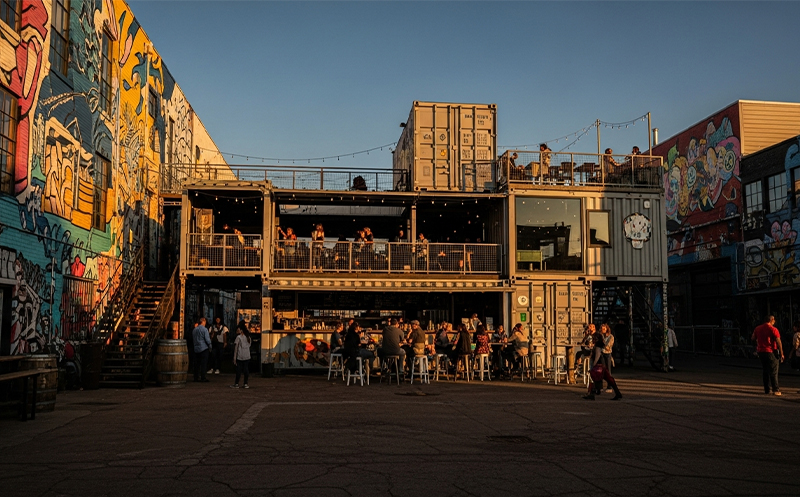
If you’ve spent any time in the River North Art District, you’ve seen them: massive, corrugated steel boxes transformed into bustling bars, coffee shops, and boutiques. They seem to have popped up overnight, defining the neighborhood’s industrial-chic vibe as much as the murals that cover every wall. They are a fixture in what has become known as an ever-changing art district.
But why are so many entrepreneurs choosing to build their dreams inside a metal box? Is it cheaper, easier, or just part of the RiNo uniform? You’re not the only one asking. It’s a common question for anyone walking past another perfectly rectangular patio packed with people. So, we looked into it.
The Economics of the Steel Box
The short answer is money, but it’s more complicated than you might think. The trend is driven by a combination of lower upfront costs, the need for business flexibility, and a desire to fit into the neighborhood’s distinct aesthetic.
It’s Cheaper Than Bricks (Usually)
Let’s get straight to it: opening a traditional brick-and-mortar business in a neighborhood as hot as RiNo can be financially crushing. You’re looking at astronomical rent for commercial space, followed by months—or even years—of expensive construction and permitting before you can even think about pouring your first beer. This high barrier to entry can lock out smaller, independent businesses that often give a neighborhood its character.
Enter the shipping container. In contrast to a multi-year lease and a six-figure build-out, the structure itself is surprisingly affordable. According to industry data, a used 40-foot high-cube container typically costs between $2,500 and $5,000. While that’s just the starting point—modifications are where the real costs lie—it represents a dramatically lower initial investment for the physical structure. This financial leg-up gives scrappy entrepreneurs a fighting chance to set up shop in one of Denver’s most desirable and expensive areas.
| Feature | Shipping Container Bar | Traditional Bar Build-Out |
|---|---|---|
| Upfront Cost | Lower (for the structure) | Very High (leasing, construction) |
| Build Time | Weeks to Months | Months to Over a Year |
| Flexibility | High (can be moved/reconfigured) | Low (fixed structure) |
| Cool Factor | Built-in industrial aesthetic | Requires expensive interior design |
| Zoning | Can be complex and novel | Established but rigid process |
The Need for Speed and Flexibility
Modern retail is increasingly about adaptability. The pop-up model has proven that businesses can thrive without being tied to a permanent location, and shipping containers are the ultimate expression of this semi-permanent mindset. They can be deployed relatively quickly, allowing owners to start generating revenue in months, not years. And if a location doesn’t work out or a lease ends, the entire business can theoretically be picked up and moved.
This modularity is a perfect match for RiNo’s identity as an ever-changing art district. It allows the neighborhood’s commercial landscape to shift and evolve alongside its creative one. This isn’t just a Denver phenomenon, either. Similar shipping container concepts are appearing nationally, from a unique bar and event space in Richmond, Virginia, to an entire Cargo District in Wilmington, North Carolina. The model’s speed and flexibility are proving to be a winning combination in developing urban areas across the country.
Life in the Box: An Owner’s Perspective
Talking to business owners reveals that operating out of a shipping container is a double-edged sword. It offers unique advantages that are hard to replicate in a traditional space, but it also comes with a distinct set of headaches.
The Good: Industrial Vibes and Patio Paradise
For a neighborhood that grew out of industrial warehouses and rail yards, the corrugated steel of a shipping container feels authentic. It’s a look that doesn’t feel manufactured or forced; it feels like it belongs. This built-in aesthetic saves owners a fortune on interior design while attracting customers who are looking for that specific, gritty, artistic vibe.
More importantly, the small interior footprint of containers forces businesses to focus on what Denverites love most: patios. Most container bars are really just service hubs for massive outdoor spaces. This focus on indoor/outdoor flow is a huge draw in a city with 300 days of sunshine. This is especially relevant as the city considers creating common consumption areas in RiNo, which would allow you to buy a drink and walk with it outdoors within a designated district. There’s also a sustainability argument to be made. By repurposing a used container, a business owner saves an estimated 3,500 kg of steel and reduces the project’s carbon footprint.
The Bad: Weather Woes and Logistical Nightmares
Of course, living and working in a metal box isn’t always glamorous. The first major hurdle is making it habitable. Insulating a steel container to handle Colorado’s wild temperature swings—from scorching summer afternoons to frigid winter nights—is both difficult and expensive. Then there’s the challenge of running plumbing, electrical, and HVAC systems through a structure that was never designed for them. The interior space is also surprisingly limited once you add insulation, drywall, and necessary equipment.
But the biggest headaches often come before the first nail is hammered. Getting a 40-foot, multi-ton steel box delivered and dropped onto a small, busy city lot is a massive logistical puzzle. It requires clear street access, heavy-duty cranes, and deep expertise in handling shipping containers to avoid disaster. One wrong move and you’ve blocked a street, damaged property, or worse. This stage is so critical that finding a supplier with experience navigating tight urban sites and managing complex deliveries is one of the most important first steps for any aspiring container-preneur. You need a distributor that offers on-site, precise placement across the US, with flexible scheduling and insured transit.
Here’s a quick summary of what owners face:
Pros:
- Lower initial structural cost.
- Unique aesthetic that attracts customers.
- Faster construction and opening timeline.
- Modular and potentially mobile.
Cons:
- Expensive and complex modifications (insulation, HVAC, plumbing).
- Zoning and permitting can be a bureaucratic headache, as seen in other cities grappling with these novel structures in a process that can be a tricky one.
- Logistical challenges with delivery and placement.
- Limited interior square footage.
The Verdict: Is Container Culture Here to Stay?
So, what’s the deal? The deal with the shipping container bars is that they represent a perfect, if imperfect, solution for RiNo’s unique identity. They are a physical manifestation of the neighborhood’s blend of art, industry, and entrepreneurial spirit. They are temporary yet permanent, cheap yet expensive, simple yet complex—a contradiction that feels right at home in a district built on creative reinvention.
While the trend is visible nationally, it’s found a special home in RiNo, a neighborhood that got its name from creative reuse and celebrates its industrial roots. It’s less about simply saving money and more about making a deliberate aesthetic choice that resonates with the area’s identity. As RiNo continues to see massive new developments like the upcoming Denargo Market beer garden, the humble shipping container serves as a gritty, accessible counterpoint to slick, expensive high-rises. It’s less of a fleeting trend and more of a foundational element of the neighborhood’s modern character.